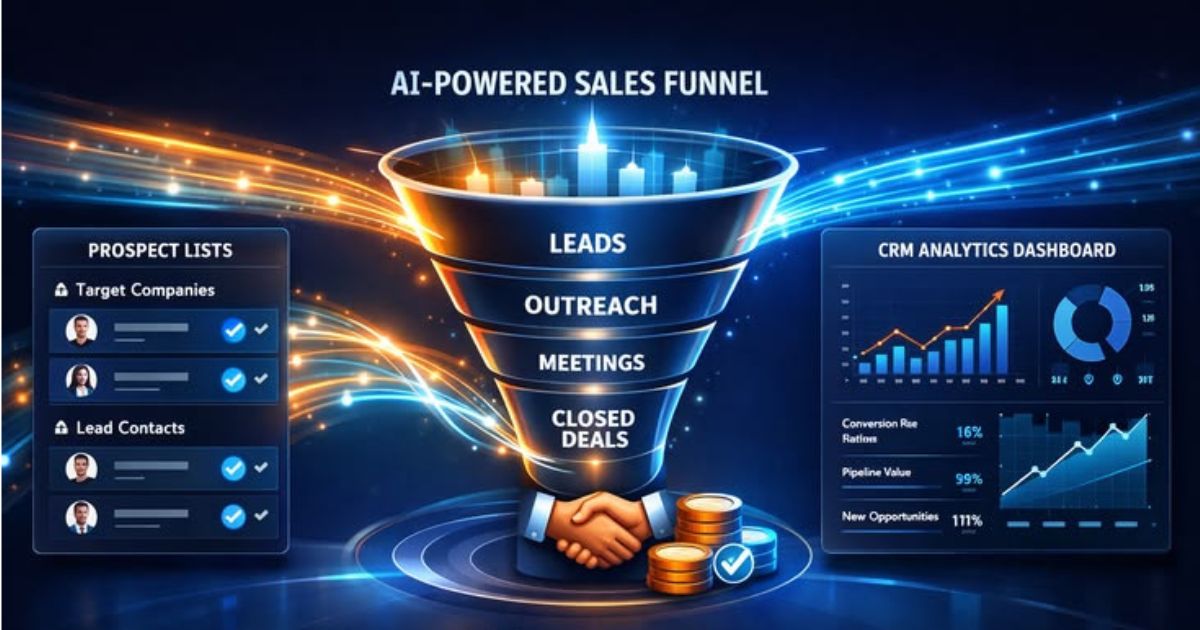
Email marketing funnels are one of the most effective ways to guide potential customers from initial interest to taking meaningful action. Whether your goal is to increase clicks, generate leads, or drive sales, a well-structured email funnel can make all the difference.
In this in-depth guide, you’ll learn how to build simple yet powerful email funnels that consistently increase click-through rates and engagement—without unnecessary complexity.
What Is an Email Funnel?
An email funnel is a sequence of emails designed to guide subscribers through a journey. This journey typically starts when someone joins your email list and continues until they take a desired action, such as clicking a link, making a purchase, or signing up for a service.
Why Email Funnels Matter
Instead of sending random emails, funnels provide structure and purpose. They help you:
- Deliver the right message at the right time
- Build trust gradually
- Increase engagement and clicks
- Improve conversion rates
A simple funnel can outperform a complex one if it is clear, targeted, and relevant.
Understanding the Click Journey
Before building your funnel, it’s important to understand what motivates someone to click.
The Psychology Behind Clicks
People click when:
- They are curious
- They see value
- They trust the source
- The action feels easy and low-risk
Your funnel should address all these factors step by step.
Reducing Friction
Every barrier reduces clicks. Common friction points include:
- Confusing messages
- Too many links
- Lack of clarity
- Poor design
Your goal is to make clicking the easiest decision possible.
The Structure of a Simple Email Funnel
A high-performing email funnel doesn’t need dozens of emails. In fact, simplicity often leads to better results.
The 5-Step Simple Funnel
- Welcome Email
- Value Email
- Authority Email
- Offer Email
- Reminder Email
Each step has a specific purpose and builds on the previous one.
Step 1: The Welcome Email
Your welcome email sets the tone for your entire funnel.
Goals of the Welcome Email
- Introduce your brand
- Set expectations
- Deliver immediate value
- Encourage the first click
What to Include
- A warm greeting
- A brief introduction
- A clear benefit
- A simple call to action
Example CTA Ideas
- Read the guide
- Watch the video
- Explore the resource
Best Practices
- Send immediately after sign-up
- Keep it short and friendly
- Focus on one main action
Step 2: The Value Email
This email builds trust by providing useful content.
Types of Value Content
- How-to guides
- Tips and tricks
- Case studies
- Educational resources
Why Value Emails Increase Clicks
When subscribers find your emails helpful, they are more likely to engage with future messages.
Structure of a Value Email
- Problem introduction
- Helpful solution
- Link to more detailed content
Step 3: The Authority Email
Now it’s time to establish credibility.
Building Authority
Show your expertise through:
- Results you’ve achieved
- Testimonials
- Real-world examples
Content Ideas
- Success stories
- Before-and-after transformations
- Insights from experience
Why This Matters
People are more likely to click when they trust you.
Step 4: The Offer Email
This is where you present your main offer.
Key Elements of a High-Converting Offer Email
- Clear value proposition
- Benefits (not just features)
- Strong call to action
Writing Persuasive Copy
Focus on:
- What the reader gains
- How it solves their problem
- Why they should act now
Avoid Overloading
Keep your email focused on one offer and one action.
Step 5: The Reminder Email
Many people don’t act the first time.
Purpose of the Reminder
- Reinforce the message
- Create urgency
- Capture missed opportunities
Techniques to Use
- Limited-time offers
- Countdown reminders
- Highlight missed benefits
Writing Emails That Drive Clicks
The structure of your funnel is important, but so is the content inside each email.
Use Clear and Simple Language
Avoid complexity. Write like you speak.
Focus on One Goal per Email
Too many options can confuse readers. Keep it focused.
Use Curiosity
Give just enough information to encourage a click.
Crafting Click-Worthy Subject Lines
Your subject line determines whether your email gets opened.
Effective Subject Line Techniques
- Ask questions
- Use numbers
- Create urgency
- Highlight benefits
Examples
- Want More Clicks From Your Emails
- 3 Simple Tricks to Boost Engagement
- Don’t Miss This Opportunity
Designing Emails for Clicks
Design plays a big role in user behavior.
Keep It Mobile-Friendly
Most users read emails on their phones. Use:
- Short paragraphs
- Large buttons
- Readable fonts
Use Visual Cues
Guide readers to your CTA with:
- Arrows
- Buttons
- Highlighted text
The Power of a Single Call to Action
Multiple CTAs can reduce clicks.
Why One CTA Works Better
- Less confusion
- Clear direction
- Higher conversion rates
How to Create a Strong CTA
- Use action words
- Make it visible
- Add urgency
Timing Your Funnel Correctly
Timing affects engagement.
Recommended Timing
- Welcome email: immediately
- Value email: 1–2 days later
- Authority email: 2–3 days later
- Offer email: 2–3 days later
- Reminder email: 1–2 days later
Test and Adjust
Every audience is different. Use data to refine timing.
Segmenting Your Funnel
Not all subscribers behave the same way.
Simple Segmentation Ideas
- Clicked vs. non-clicked
- New vs. returning users
- Interest-based groups
Benefits
Segmentation increases relevance, which leads to more clicks.
Using Automation to Scale
Automation makes your funnel efficient.
Benefits of Automation
- Saves time
- Ensures consistency
- Delivers timely messages
Tools to Consider
Email marketing platforms allow you to:
- Set triggers
- Schedule emails
- Track performance
Testing and Optimizing Your Funnel
Continuous improvement is key.
What to Test
- Subject lines
- Email copy
- CTA placement
- Timing
A/B Testing Basics
- Test one variable at a time
- Use enough data
- Analyze results carefully
Tracking the Right Metrics
Data helps you improve performance.
Key Metrics
- Open rate
- Click-through rate
- Conversion rate
What Matters Most
Clicks are your primary focus, but conversions are the ultimate goal.
Common Mistakes to Avoid
Even simple funnels can fail if mistakes are made.
Mistakes That Reduce Clicks
- Sending too many emails
- Writing long, unclear messages
- Ignoring mobile users
- Using weak CTAs
Fixing These Issues
Focus on clarity, simplicity, and relevance.
Advanced Strategies for More Clicks
Once your basic funnel works, you can enhance it.
Personalization
Use:
- Names
- Preferences
- Behavior
Dynamic Content
Show different content based on user actions.
Retargeting
Combine email with ads to reinforce your message.
Building Trust Throughout the Funnel
Trust is essential for clicks.
How to Build Trust
- Be consistent
- Provide value
- Avoid spammy tactics
Transparency
Let users know what to expect from your emails.
Creating a Seamless User Experience
Your email is just one part of the journey.
Optimize Landing Pages
Ensure your links lead to:
- Fast-loading pages
- Clear messages
- Easy navigation
Match Expectations
Your email and landing page should align.
Scaling Your Email Funnels
Once you have a working funnel, scale it.
Ways to Scale
- Increase traffic
- Expand your list
- Add new funnels
Replicate Success
Use what works and apply it to other campaigns.
Real-World Example of a Simple Funnel
Let’s look at a basic example:
- User signs up for a free guide
- Receives welcome email with download link
- Gets value email with tips
- Receives authority email with case study
- Gets offer email for a related product
- Receives reminder email
This simple sequence can significantly increase clicks and conversions.
Long-Term Funnel Optimization
Email funnels are not “set and forget.”
Regular Improvements
- Update content
- Refresh offers
- Test new ideas
Stay Relevant
Adapt to changing audience needs and trends.
The Future of Email Funnels
Email marketing continues to evolve.
Emerging Trends
- AI-driven personalization
- Interactive emails
- Behavioral automation
Staying updated ensures long-term success.
Conclusion
Simple email funnels are powerful tools for increasing clicks and driving conversions. By focusing on clarity, relevance, and user experience, you can create funnels that guide your audience naturally toward action.
You don’t need complex systems to succeed. Start with a simple structure, test your approach, and continuously improve. Over time, your email funnels will become one of your most valuable marketing assets.