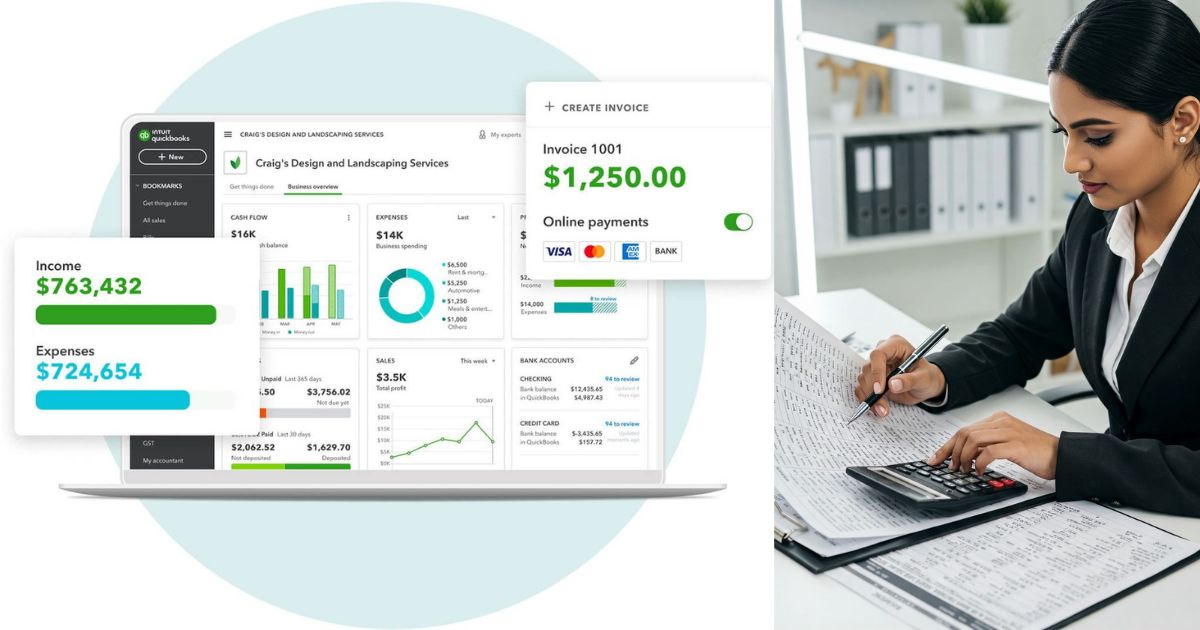
Introduction
In today’s fast-paced digital economy, choosing the right accounting software is no longer optional—it’s a critical decision that can directly impact your business growth, cash flow, and compliance. Whether you’re a startup founder, freelancer, or small business owner, modern accounting tools can automate repetitive tasks, reduce human error, and provide real-time financial insights.
With the rise of cloud computing, AI-powered automation, and integrated business ecosystems, accounting software in 2026 has evolved significantly. Platforms like QuickBooks, Xero, and Zoho Books now offer intelligent automation, predictive insights, and seamless integrations with other business tools.
This comprehensive guide will walk you through:
- The best accounting software for small businesses in 2026
- Key features you must look for
- Pricing comparisons
- Expert reviews and recommendations
- How to choose the right solution for your needs
What Is Accounting Software?
Definition and Core Functionality
Accounting software is a digital tool designed to help businesses manage financial transactions, including:
- Recording income and expenses
- Generating invoices
- Tracking cash flow
- Managing payroll
- Producing financial reports
Modern accounting systems go beyond bookkeeping by offering automation, analytics, and integrations with banking systems.
Why Small Businesses Need Accounting Software
Small businesses face unique challenges such as limited resources, manual errors, and compliance risks. Accounting software helps solve these by:
- Automating repetitive tasks
- Reducing accounting errors
- Saving time and operational costs
- Ensuring tax compliance
- Providing financial insights for decision-making
Key Features to Look for in Accounting Software (2026)
1. Cloud-Based Accessibility
Cloud accounting software allows users to access financial data anytime, anywhere. This is especially useful for remote teams and business owners on the go.
2. Automation & AI Capabilities
AI is transforming accounting. Tools now automatically:
- Categorize expenses
- Generate invoices
- Detect anomalies in financial data
- Predict cash flow trends
Some platforms even help close financial books faster using AI agents .
3. Invoicing and Billing
A good accounting system should allow you to:
- Create professional invoices
- Automate recurring billing
- Accept online payments
4. Expense Tracking
Tracking expenses is essential for profitability. Look for features like:
- Receipt scanning
- Bank feed integration
- Automatic categorization
5. Financial Reporting
Key reports include:
- Profit & Loss statements
- Balance sheets
- Cash flow statements
These reports help business owners make informed decisions.
6. Integration Capabilities
Top accounting software integrates with:
- Payment platforms (Stripe, PayPal)
- CRM tools
- E-commerce platforms
7. Multi-User Access
Some platforms allow unlimited users, making collaboration easier for growing teams .
Top Accounting Software for Small Businesses in 2026
1. QuickBooks Online
Overview
QuickBooks remains one of the most popular accounting platforms worldwide, especially for small and medium-sized businesses.
Key Features
- Advanced reporting tools
- AI-powered insights and anomaly detection
- Payroll and tax management
- Extensive integrations (800+ apps)
Pricing
- Starts at around $38/month for basic plans
- Advanced plans go up to $275/month
Pros
- User-friendly interface
- Powerful features
- Strong ecosystem
Cons
- Expensive compared to competitors
- Limited users depending on plan
Expert Review
Experts highlight QuickBooks as one of the most feature-rich and intuitive accounting platforms, especially for beginners and growing businesses.
2. Xero
Overview
Xero is a cloud-based accounting software known for affordability and scalability.
Key Features
- Unlimited users on all plans
- Strong bank reconciliation tools
- Multi-currency support
- 600+ integrations
Pricing
- Starts at $25/month
- Mid-tier plan: $55/month
Pros
- Cost-effective
- Ideal for growing teams
- Clean interface
Cons
- Limited customer support
- Slight learning curve
Expert Review
Xero is often considered the best value accounting software for small businesses due to its pricing and scalability .
3. Zoho Books
Overview
Zoho Books is part of the Zoho ecosystem and is ideal for businesses already using Zoho tools.
Key Features
- Workflow automation
- Project billing
- Multi-currency support
- Mobile-friendly interface
Pricing
- Free plan available (limited features)
- Paid plans start around $15/month
Pros
- Affordable
- Great automation features
- Strong mobile app
Cons
- Interface can feel cluttered
- Limited third-party integrations compared to competitors
Expert Review
Zoho Books is widely recognized as one of the best value-for-money accounting solutions for startups and freelancers.
4. FreshBooks
Overview
FreshBooks is designed for freelancers and service-based businesses.
Key Features
- Time tracking
- Expense tracking
- Professional invoicing
Pricing
- Starts at $19/month
Pros
- Easy to use
- Excellent invoicing features
Cons
- Limited advanced accounting features
- Not ideal for inventory management
Expert Review
FreshBooks is perfect for freelancers and consultants who need simple accounting tools without complexity.
5. Wave Accounting
Overview
Wave is a free accounting software option for small businesses.
Key Features
- Free invoicing and accounting
- Basic financial reporting
- Payment processing (paid feature)
Pricing
- Free (core features)
Pros
- Completely free
- Easy to use
Cons
- Limited features
- Not scalable
Expert Review
Wave is ideal for very small businesses or solopreneurs with minimal accounting needs.
Accounting Software Comparison Table (2026)
| Software | Starting Price | Best For | Key Feature |
|---|---|---|---|
| QuickBooks | $38/month | Growing businesses | Advanced reporting & AI insights |
| Xero | $25/month | Teams & scalability | Unlimited users |
| Zoho Books | $15/month | Budget-friendly automation | Workflow automation |
| FreshBooks | $19/month | Freelancers | Time tracking & invoicing |
| Wave | Free | Beginners | Free accounting tools |
Benefits of Using Accounting Software
1. Time Efficiency
Automation reduces manual data entry and saves hours each week.
2. Improved Accuracy
Built-in error detection helps minimize financial mistakes.
3. Better Financial Insights
Real-time dashboards provide a clear view of business performance.
4. Scalability
Cloud-based systems grow with your business.
How to Choose the Right Accounting Software
Step 1: Identify Your Business Needs
Ask yourself:
- Do you need payroll?
- How many users will access the system?
- Do you require inventory tracking?
Step 2: Set Your Budget
Accounting software ranges from free to $300/month depending on features.
Step 3: Consider Ease of Use
If you’re not an accountant, choose a user-friendly platform.
Step 4: Check Integrations
Ensure compatibility with your existing tools.
Step 5: Try Free Trials
Most platforms offer free trials—use them before committing.
Trends in Accounting Software for 2026
AI-Powered Accounting
AI is becoming standard, helping businesses:
- Automate bookkeeping
- Predict financial trends
- Detect fraud
Cloud-First Solutions
Cloud accounting dominates due to flexibility and scalability.
Mobile Accounting
Mobile apps allow business owners to manage finances on the go.
Integration Ecosystems
Modern tools integrate seamlessly with CRM, HR, and e-commerce platforms.
Common Mistakes to Avoid
1. Choosing Based on Price Alone
Cheaper isn’t always better—focus on value.
2. Ignoring Scalability
Choose software that grows with your business.
3. Overlooking Support
Customer support is crucial, especially for beginners.
Expert Tips for Maximizing Accounting Software
Automate Everything Possible
Set up rules for recurring transactions and invoices.
Use Real-Time Reporting
Monitor your financial health regularly.
Integrate with Other Tools
Connect your accounting software with CRM and payment systems.
Conclusion
Choosing the best accounting software for your small business in 2026 depends on your specific needs, budget, and growth plans.
- QuickBooks is best for powerful features and ease of use
- Xero offers the best value and scalability
- Zoho Books is ideal for automation and affordability
- FreshBooks works best for freelancers
- Wave is perfect for beginners on a budget
By understanding your business requirements and comparing features, pricing, and usability, you can select the right accounting software to streamline your finances and drive growth.